How to Identify Excessive Neutral Line Current and Its Solutions
You are here:Home » Blogs » Blogs » How to Identify Excessive Neutral Line Current and Its Solutions
How to Identify Excessive Neutral Line Current and Its Solutions
Views: 0 Author: Site Editor Publish Time: 2026-05-20 Origin: Site
Excessive neutral line (N-line) current essentially stems from three main issues: severe three-phase current imbalance, harmonic superposition, and circuit abnormalities, with the first two being the most common in daily power distribution.
1. Severe Three-Phase Load Imbalance (Most Common)
In a three-phase four-wire power distribution system, the ideal state is that the vector sum of three-phase currents is zero, resulting in almost no current in the neutral line.
Single-phase loads (sockets, lighting, air conditioners, household appliances) are concentrated on one phase, leading to uneven three-phase distribution.
When unbalanced, the vector sum of the three phases is non-zero, and the difference flows entirely through the neutral line. The greater the load difference, the higher the neutral line current.
2. Superposition of Third-Order and Multiple Harmonic Currents (High Incidence in Office Buildings, Malls, and Residential Premises)
Widespread use of switching power supply loads: LED lights, computers, servers, frequency converters, charging piles, smart devices.
Zero-sequence harmonics (3rd, 9th, 15th, etc.) do not cancel out on the neutral line but superpose algebraically.
Even with balanced three-phase loads, harmonics can make the neutral line current greater than the current in any phase conductor, sometimes reaching 1.5 to 2 times the phase current.
3. Neutral Line Circuit Faults / Wiring Issues
Loose, oxidized, or poorly connected neutral line joints increase impedance and cause abnormal heating and current.
Incorrect or mixed neutral line wiring, or unreasonable repeated grounding, forms shunt loops.
Partial neutral-ground mixing diverts part of the working current into the grounding grid, distorting and increasing the neutral line current.
4. Less Common Causes
Dense simultaneous operation of high-power single-phase loads leads to large instantaneous inrush current.
Asymmetric transformer windings or inherently unbalanced three-phase output voltage.
Line leakage or aging insulation causes leakage current to converge into the neutral line.
Simple Identification Method
Measure three-phase currents and neutral line current:
Large differences in three-phase currents → caused by imbalance.
Balanced three-phase currents but neutral line current far exceeding phase current → dominated by harmonics.
Obvious overheating of neutral line cables/joints → almost always indicates current overload.
How to Identify Excessive Neutral Line Current
Abnormal Equipment Noise Warning
Abnormal noise or humming from transformers, distribution cabinets, etc.
Conductor Overheating
Abnormally high surface temperature of N-line cables and busbars, hot to the touch.
Protection Device Tripping
Frequent unexplained tripping of air switches and protectors with no obvious faults.
Abnormal Lighting System
Unexplained flickering of lights in workshops or office areas.
Abnormal Load Equipment Operation
Unstable operation of connected motors, pumps, and other power equipment, accompanied by abnormal vibration, noise, and reduced efficiency.
Solutions
Redistribute single-phase loads evenly across the three phases.
Install zero-sequence harmonic filters and neutral line current limiters in high-harmonic environments.
Tighten neutral line joints, eliminate neutral-ground mixing, and increase neutral line cross-section (for harmonic environments, the neutral line should be no smaller than the phase conductor).
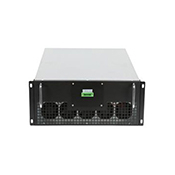
ANSNP Neutral Line Safety Protector
The ANSNP Neutral Line Safety Protector is the core device for terminal electrical comprehensive management. It conducts real-time detection and intelligent analysis of end-circuit currents, accurately controls harmonics and three-phase imbalance, effectively resolves excessive neutral line current caused by 3N-order harmonics and three-phase imbalance, and completely eliminates electrical fire hazards.
Standardized Product Specifications
Covers full-scenario management capabilities from 0 to 300A.
Model
Current Range
Application Scenarios
ANSNP30
0–90A
Small commercial facilities, offices
ANSNP50
0–150A
Medium-sized shopping malls, hotels
ANSNP70
0–200A
Factory workshops, data centers
ANSNP100
0–250A
Large industrial equipment
ANSNP150
0–300A
Heavy industry, large manufacturing plants
Typical Power Distribution
Authoritative Certifications
Type test by Shanghai Electrical Apparatus Research Institute
Safety certification
National authoritative testing
Product quality certification
Core Function 1: Efficient Filtering of 3N-Order Harmonics
Before Treatment: Severe superposition of 3N-order harmonics.It targets 3rd, 9th, and other 3N-order harmonics, which superpose on the neutral line (N-line) and cause excessive current, posing serious safety hazards.
After Treatment: Total harmonic compensation rate > 95%.
It effectively eliminates waveform distortion and significantly reduces N-line current, fundamentally resolving overload issues and ensuring electrical safety.
Core Function 2: Dynamic Compensation for Three-Phase Imbalance
It monitors three-phase current differences in real time, dynamically adjusts the output of each phase, and controls the imbalance degree within 5%, effectively preventing excessive N-line current caused by imbalance.
Core Function 3: Comprehensive Monitoring and Active Protection
Data Monitoring: Real-time monitoring of over 20 electrical parameters including voltage, current, power, and temperature for full visibility of equipment operation status.
Active Protection: Multiple protection functions such as overcurrent, overvoltage, undervoltage, and overtemperature; automatic alarms in case of faults to ensure system safety.
Fault Recording: Automatic logging of equipment operation and historical fault data for traceability, facilitating subsequent analysis and maintenance.
On-Site Installation
Mobile APP: Real-Time System Monitoring Anytime, Anywhere
On-Site Equipment Start/Stop Control: Operation personnel can directly control equipment via mobile phones on-site, eliminating trips to the central control room for convenient and efficient operation.
Real-Time Operation Data Query: Check key operational indicators anytime, anywhere with visualized data display for clear status visibility.
Remote Parameter Configuration and Alarms: Supports remote parameter setting and instant fault alerts, ensuring prompt issue detection.